OpenStreetMap logo OpenStreetMap

Diary Entries in English

Recent diary entries

Posted by Anonymous36863 on 12 February 2026 in English.

About 99% of supplements have garbage in them like seed oils, starch, citric acid or other fillers because most people are too ignorant to read the ingredients labels, let alone realize that ultra-processed pseudo-food is harmful for them in the first place.

I wonder if there is some tag for a nutrition supplements store to state that they offer clean supplements with just one ingredient, just like vegetarian tags, except focused on health rather than ethics.

Maybe diet:raw=* could somewhat apply?

For a while, I was interested in understanding what makes one pedestrian OSM way better than another. I wanted to know if there is some generic way to identify good walking routes from OSM data. I looked at Garmin and Strava heatmaps at first. Then I checked Strava segments and their proximity to points of interest such as rivers, ponds, and parks. Then I thought to look at my running pace along OSM ways to separate good and not-so-good walking routes. My idea was simple — a good walking route means a smooth running pace. There are fewer stops, less waiting at intersections, etc. Of course, my pace depends on many factors, such as how far I have to run to get to a certain place. So it cannot be a simple cutoff, but rather the distribution of paces along a given segment. This turned out to be a reasonably good approximation of how good or bad I perceive each route to be. I created this Kaggle dataset as an illustration. This relies on my personal GPX data, so it does not scale, but it captures the kind of local knowledge that I find hard to share in any other way.

Location: Tay Ho Ward, Hà Nội, 11214, Vietnam

Hello! I’m Quincy Morgan. Thank you for considering my candidacy for the board of directors of OpenStreetMap US.

If we haven’t met before, or if you just want to chat about OSM, I encourage you to reach out via OSM, Slack, email, or social media. You can check out my website for detailed information about me, my work, and more ways to contact me.

About

I have been an avid member of the OpenStreetMap community since 2018 in both volunteer and professional capacities. I am the only person to have been employed by both OpenStreetMap US and the OpenStreetMap Foundation. Recently I have organized my activities under Wayside Mapping.

Mapping

As a volunteer mapper, I’ve contributed more than 13,000 changesets over the span of 1,400 mapping days, including more than 3,000 changesets in the past year. My mapping interests are varied but include trails, waterways, peninsulas, scenic routes, monitoring stations, and undermapped places.

Development

As a paid and volunteer open source developer, I have made major contributions to OpenStreetMap tools such as iD, Field Papers, OpenTrailMap, and the openstreetmap.us website. Most recently, I have built and launched themap.is and OSM 411 on my own time.

Life

I’m currently based in New York City but have previously lived in Pennsylvania, California, and Idaho. I’ve spent time in all 48 contiguous United States and all 10 provinces of Canada. When I’m not at my desk, you can find me hiking, biking, paddling, train hopping, or road tripping to the next spot on the map.

Positions

I believe the core roles of a nonprofit board member are threefold:

1. Represent membership

A board member is a democratic representative of the members of the organization. If elected, it would be my job to actively listen to the community and be responsive to their interests.

See full entry

About me

I started mapping in 2021 as I tried to ride every street in Brooklyn, NY on wandrer.earth. I kept finding private streets and other issues on OSM and began fixing them.

At the moment I split my time between the Seattle area and Tucson, Arizona. My professional work is in non-profit accounting. I have worked with a number of organizations covering a full range of financial responsibilities. Handling everything from hands on bookkeeping to grant management to financial strategy.

My mapping

My most cohesive, complete project is detailed mapping of Train Mountain Railroad, the worlds longest miniature railroad. If you’re curious I gave a talk at State of the Map US in 2024 about it.

Most of my mapping is more miscellaneous in nature. I’m a big StreetComplete user, and I’ll always pull over on a bike ride to map a public bookcase! I also enjoy contributing detail to pedestrian and bicycle networks.

Board service and goals

Through the last two years serving as the Board Treasurer I have help usher OpenStreetMap US through a number of shifts in financial situation. Guiding the staff through financial challenges and changes in financial structure.

Through the next two years I want to continue this work, and assist the staff in streamlining bookkeeping and reporting. In addition, as a best practice I would like to see the organization through a financial audit or review. Ultimately leaving the organization on an even stronger financial foundation than it is today.

The seriousness with which the OpenStreetMap community approaches discussions is a true strength of the project. Over years of debate, the community has formed a highly cohesive tagging system for names. These guidelines are simple for beginners, yet they allow for the precise classification and mapping of real-world names. A name is perhaps the most vital piece of data for most users—it is what they want to see on screens and paper, hear via voice navigation, and even touch.

However, this post isn’t about which tag to choose, but rather the format in which the name should be entered. I want to discuss the phenomenon of ellipsis—or, to put it simply, the shortening of names—and what we as mappers should watch out for when collecting and adding toponyms to the map.

What are elliptical toponyms?

Elliptical toponyms are geographical proper names that have been historically truncated or shortened in oral or written use. These are often names that originally included a generic term (a word indicating the type of object), which over time partially or completely disappeared. The table below shows several examples of such “shortened” Scandinavian and Baltic toponyms:

Historical Full Form Truncated Form Explanation
Sed-ezeris Sedzeris The hydronym “Lake Seda” lost the generic term ezeris (lake).
Spanggroben Spanget A neighborhood near a stream; the second element -groben (ditch/trench) was dropped.
Stampedam Stampen A farmstead near a pond; the second element -dam (pond) was dropped, leaving only the specific element.
Sankt Peters Kirche Sankt Peter St. Peter’s Church; the second element Kirche (church) was dropped.

See full entry

Location: Shevchenkivskyi district, Kyiv, Ukraine
Posted by luke_unknown on 6 February 2026 in English. Last updated on 11 February 2026.

Today, I continued my journey as an OpenStreetMap contributor by actively participating in humanitarian mapping through the HOT Tasking Manager. During this session, I focused on mapping basic features such as buildings and road segments using satellite imagery.

This experience helped me better understand the importance of accurate data in supporting humanitarian efforts, including disaster response and community planning. I paid close attention to data quality, proper tagging, and alignment with OpenStreetMap mapping guidelines.

Through this contribution, I strengthened my familiarity with the OSM editing tools and improved my confidence as a mapper. I also gained valuable insight into how collaborative mapping enables volunteers from around the world to support vulnerable communities with reliable geospatial data.

I look forward to continuing my contributions, improving my skills, and participating in more humanitarian mapping projects in the future.

Location: Amligola, Lalbag, Dhaka, Dhaka Metropolitan, Dhaka District, Dhaka Division, 1211, Bangladesh

Jovita Fuentes Javellana, age 82, of Acworth, GA, passed away on Thursday, February 7, 2019. She was born on June 24, 1936 in Iloilo, Barotac Nuevo in the Philippines to Angelina Agudo and Nicolas Fuentes. We call her by her name, Betty. Our lola (Grandma) Betty.

Jovita was a dedicated and loving wife, mother and grandmother. She had a talent for sewing, crocheting and gardening. In addition to being a wonderful mother, Jovita was also a great cook.

See full entry

Why this matters

In disasters and other connectivity outages, people on the ground often see road blockages, landslides, bridge damage, or other map-relevant changes before reliable Internet access is restored. Traditional reporting channels fail when cellular networks are down or overloaded.

This post shares a community-oriented experiment: using a LoRa mesh (Meshtastic) to send simple field reports from phones (via Bluetooth to a LoRa device) to a gateway that later publishes them as OpenStreetMap Notes once Internet is available.

Scope & safety: this is not an emergency response system. Please do not include personal data (PII) or life-critical requests. The goal is to support mapping workflows.


What we built (high level)

OSM Mesh Notes Gateway turns offline messages into OSM Notes:

  1. A field volunteer carries a GNSS-enabled LoRa device (e.g., T‑Echo) and connects their phone via Bluetooth using the Meshtastic app.
  2. They send a short message starting with #osmnote.
  3. The message travels across the LoRa mesh to a node connected by USB to a Raspberry Pi gateway.
  4. The gateway validates that the device’s last GNSS fix is recent (for mobility), queues the report if offline, and creates an OSM Note when Internet is available.
  5. The gateway replies by direct message (DM) with an acknowledgement and privacy reminder.

Key ideas that make it work in the field

### 1) GNSS recency checks (mobility-aware) Because position updates and text messages may arrive separately in a mesh, the gateway uses the latest known GNSS position per device and enforces strict time thresholds (e.g., 15s ideal, 60s max) to avoid placing notes far from the real location (especially in vehicles).

2) Store-and-forward queue

If the gateway has no Internet, reports are stored locally (SQLite) and retried periodically. Users get a local queue ID like Q-0007.

3) “Queued → published” notifications

See full entry

Posted by Jorieke V on 3 February 2026 in English.

Dear all,

With this post I have the pleasure to share with you that the Missing Maps initiative has a brand new website!

👉http://www.missingmaps.org

The site has been renewed with a fresh design and you can now explore upcoming mapping events, read stories on our blog, and more!

I’ve always loved the old website, which was launched with the foundation of the Missing Maps in 2014, it however started to gradually break down with a lot of functionalities becoming rather non-functionalities.

Thanks to this renewal process:

  • we have a completely fresh design!
  • you can find out what projects Missing Maps member organisations could use help with,
  • you can (again!) explore upcoming Missing Maps events - they are pulled in via OSMCal,
  • we can post (again!) new stories on our blog - read for sure the newest post we made!
  • you can browse learning materials and different ways to get involved,
  • and more!

Feel free to explore our new website and let us know if you have any thoughts or find any bugs. You could leave a comment in response to this diary or directly submit an issue via GitHub.

See full entry

Occasionally, I simply scroll through the map on openstreetsmap.org. A year ago, I became aware of the area around Sa Pobla, a Spanish town on the Balearic island of Mallorca. I noticed that, apart from the basic infrastructure, relatively few landcover features had been mapped. Since I had little experience with this and wanted to learn about basic things like fields and tracks in OSM, I started mapping everything that could be seen in the aerial imagery south of Sa Pobla: farmland, water ponds, tracks, roads, buildingy, orchards, etc.

I always tackle a small area that is bounded by surrounding roads. So I mapped my way clockwise around the town, extending the area northwards to the motorway. Then I planned to map the town of Búger and all its houses and began mapping my way towards it. It was rewarding and motivating to be able to see the area I had mapped in much greater detail rendered on openstreetmap.org the next day. Last year, I even had the opportunity to visit Sa Pobla on vacation!

Over the last quarter of a year, I have mapped my way further east to the large wetland area Parc Natural de s’Albufera de Mallorca.

I have left the town of Sa Pobla out for the time being, as mapping buildings in densely built-up areas has not really fulfilled me so far. It is not easy to identify the clear boundaries between houses using aerial imagery, and it is very time-consuming.

Speaking of which, I mostly use Bing, as it has the best aerial imagery available for this area. If I need a different exposure for details, I switch to Mapbox or ESRI. It is a little unsatisfactory that large areas of the town of Sa Pobla, which is at the center of my activity, are not mapped for now. But that will take some time…

Location: sa Pobla, Raiguer, Balearic Islands, 07420, Spain
Posted by rphyrin on 2 February 2026 in English. Last updated on 6 February 2026.

Starting in 2026, I slightly adjusted my daily routine, particularly around my weeklyOSM-related activity. Instead of passively consuming updates, I began actively scanning for news by lurking in several regional OSM online groups. Occasionally, genuinely newsworthy discussions emerge there.

One such case appeared today in the OpenStreetMap Braga (Portugal) Telegram group.

In the aftermath of Storm Kristin, which recently hit Portugal, multiple OSM-driven humanitarian initiatives surfaced. These efforts focused on mapping damage, identifying locations that require assistance, and highlighting places offering help.

At some point, the discussion shifted toward the need for a truly offline mapping application. Connectivity issues in affected areas appeared to render many OSM-based emergency platforms ineffective, simply because they still depend on an active internet connection.

This resonated with my own experience. I have built several “half-offline” OSM-based applications before. They are only partially offline because they store coordinate data locally in the user’s browser, while the application code itself and the OSM map tiles still require network access.

That led to a straightforward question: if we want a truly offline application, shouldn’t the map tiles themselves also be stored locally in the browser? Storing coordinate data is already trivial, but what about images? BLOBs? Is this feasible at scale?

While I was still thinking through these constraints, someone in the same Telegram group announced that an offline emergency platform had already been built. Naturally, I was curious and tested it by toggling my network connection on and off.

The result was clear: the application remained accessible offline.

See full entry

At SOTM EU I gave a demo of how to use the OSMF vector tiles with custom tiles for detailed information on a feature. In the demo I showed walls, focusing on the material of the walls.

This is an expanded explaination, focusing on the example of trees and forests.

Starting point

I start with the guide on switch2osm, building a style file to serve locally on http://127.0.0.1:8000. I then serve the release directory with a HTTP server. With simple stuff like this I tend to use node’s http-server with npx http-server release -p 8000 --cors -c-1

Making tiles with tree layers

I’m using Tilemaker to make the tile layers. This is a easy way to generate tiles but can’t be updated minutely.

I need a config file and a process file. The former tells tilemaker what layers there are, the latter takes OSM objects and adds them to the right layer

config.json

{
"layers": {
    "tree_points": { "minzoom": 10, "maxzoom": 14 },
    "tree_lines": { "minzoom": 10, "maxzoom": 14 },
    "tree_areas": { "minzoom": 6, "maxzoom": 14 }
},
"settings": {
    "minzoom": 6,
    "maxzoom": 14,
    "basezoom": 14,
    "include_ids": false,
    "compress": "gzip",
    "name": "Tree example",
    "version": "0.1",
    "description": "Sample vector tiles"
}
}

process.lua

node_keys = { "natural=tree" }
way_keys = { "natural=tree_row", "natural=wood", "landuse=forest" }

function node_function(node)
    if Find("natural") == "tree" then
        Layer("tree_points", false)
    end
end

function way_function(node)
    local natural = Find("natural")
    if natural == "tree_row" then
        Layer("tree_lines", false)
    elseif natural == "wood" or Find("landuse") == "forest" then
        Layer("tree_areas", true)
    end
end

I can now run tilemaker from the command line with ~/osm/tilemaker/tilemaker --input planet-latest.osm.pbf --output release/trees.pmtiles. The tiles takes my computer about 10 minutes to generate for the whole planet.

Using pmtiles

See full entry

Posted by Kyle Bryson on 1 February 2026 in English.

I fell down the rabit hole, learning about OSM, in order to port the map into a video game called Farm Simulator. They suggested I just rip it, and add what I want unsaved before I port, then realized I might as well just contribute to this neat open source database! I actually find it quite satisfying, and hope I’m helping. I’m not sure how long I’ll stick around, but I’m already at the max contribution…

Location: Carrot River, Saskatchewan, S0E 0L0, Canada
Posted by tumbledust on 1 February 2026 in English.

The weather’s not been great around here, so I’m keeping myself busy (and out of harms way) by updating OpenStreetMap – there are lots of missing buildings here and there, and a few missing pathways and trails.

I’ve been focusing on the Ely, Caeru, and St Fagans areas in Cardiff as I’ve a particular interest in their history (see my previous posts). My aim is to add more detail to the woodland areas, especially the locations of hidden historical sites and secluded trails.

There are lots of buildings throughout that also need re-aligning, with the last edit for many being sixteen years prior! I’ll continue to chip away until everything’s up to date – given the horrid weather, I shouldn’t run short on time!

I’ve been editing and modifying things on OpenStreetMap for about a year now, which is just insane to me!

I had never thought I’d make it to this point. At first, I was trying to modify a village and make it look a little better, but now, I can modify a lot of places.

If I showed my account to myself a year ago, he wouldn’t believe me.

Of course, this is still not my job. I’m still incredibly busy with life, which might make it harder for me to modify things on this platform, but I still enjoy my time here!

Thank you, guys, for reading this! I really appreciate your time here!

Peace.

  • Emerucha
Posted by SomeoneElse on 1 February 2026 in English.

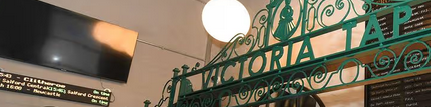
… railway departure boards in pubs.

Realtime departure board in Victoria Tap, Manchester

A surprising number of pubs near stations in the UK have them now. The picture above (a detail from this Manchester Evening New article) is from the Victoria Tap in Manchester.

A search of the OSM data in the UK** finds a few, but I’m sure that there are more. A web search finds a bunch of suppliers, and many of their “here’s what you could have in your pub” examples are clearly in the southeast and southwest of England, so I’m sure that there are more to be mapped!

** That’s a simple postpass query:

{{data:sql,server=https://postpass.geofabrik.de/api/0.2/}}
SELECT osm_id, tags, geom 
FROM postpass_pointpolygon
WHERE tags->>'amenity'='pub' 
AND tags->>'departures_board' is not null
AND geom && {{bbox}} 
Location: Medieval Quarter, City Centre, Manchester, Greater Manchester, England, M4 3TR, United Kingdom

e.g. A place called “FooBar” should show up when you search for “Foo Bar”, or “Foo & Bar’s” should appear for “Foo and Bars”.

Note the space, ampersand, and apostrophe which may affect a search engine but are not pronounced in spoken English.

Is there a tag that the search engines pick up where I can put those variations? I notice that CoMap’s search engine is pretty good, but the search on openstreetmap.org is a little more strict.